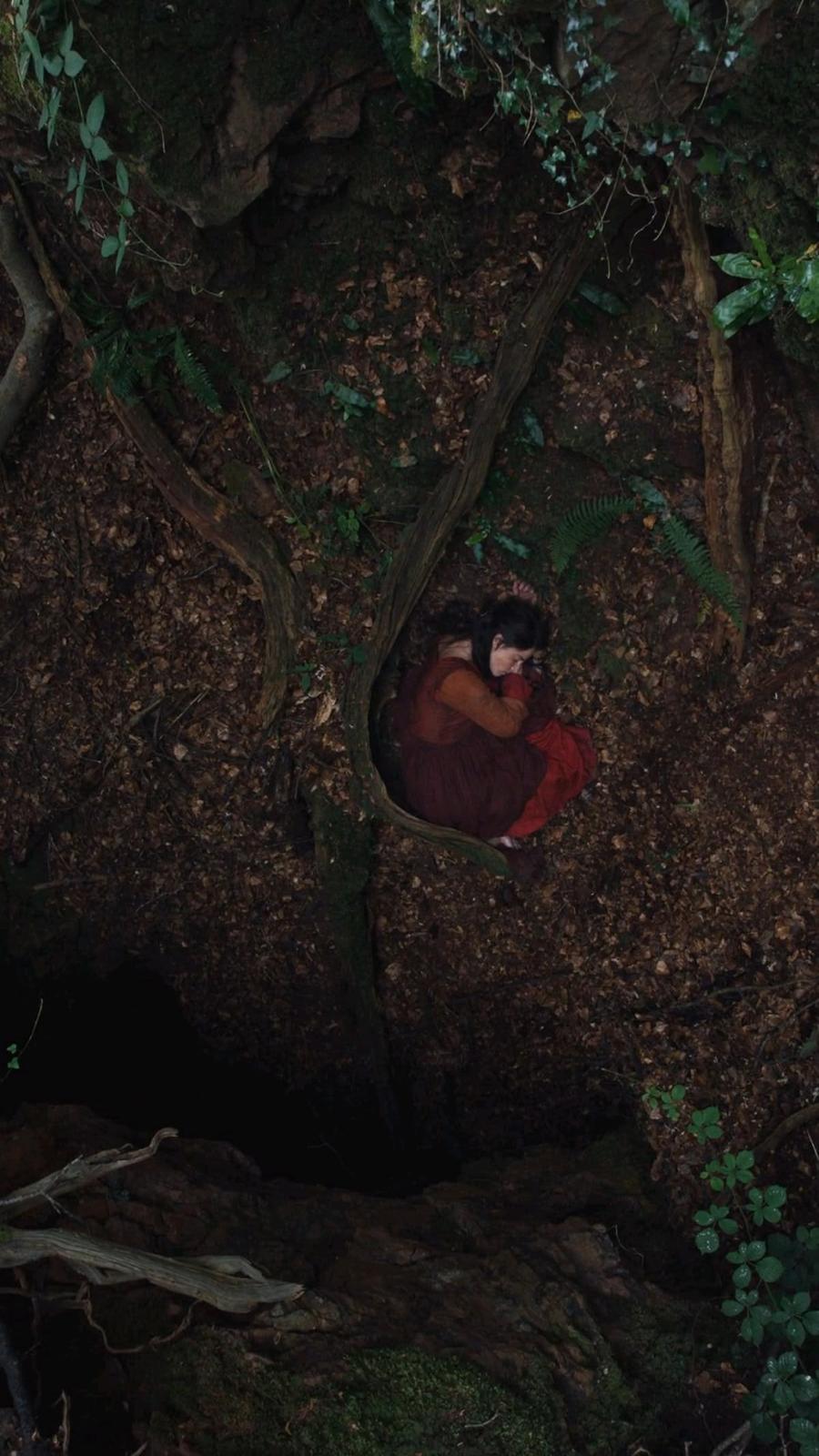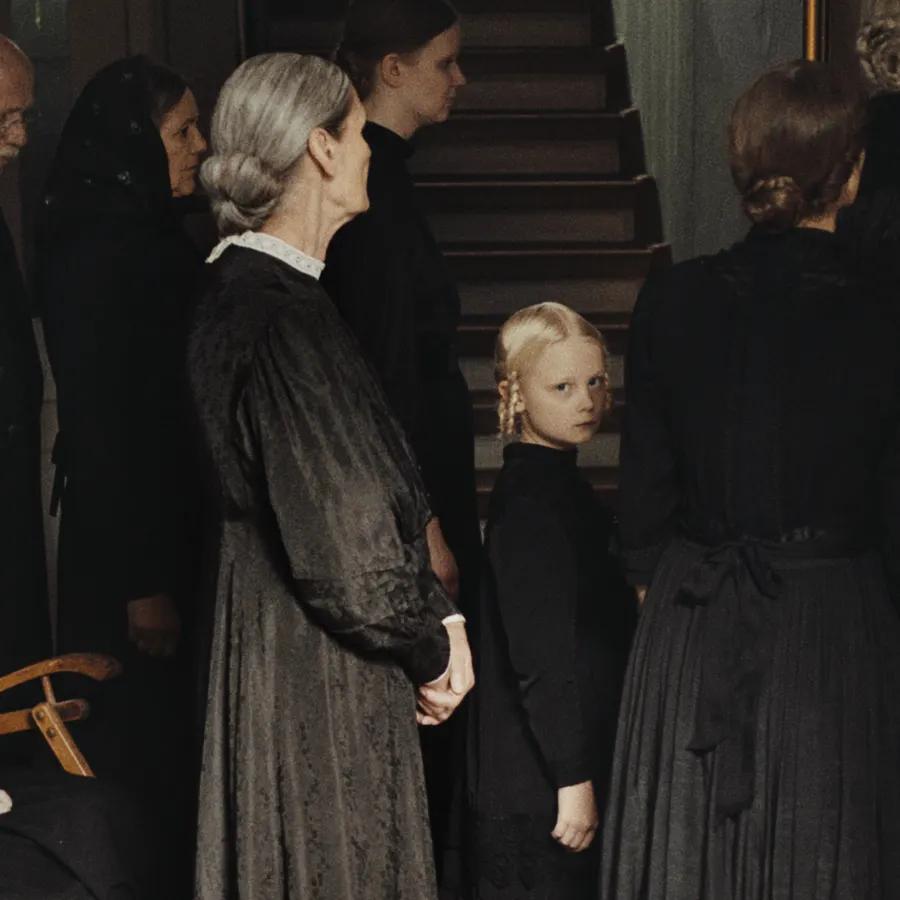

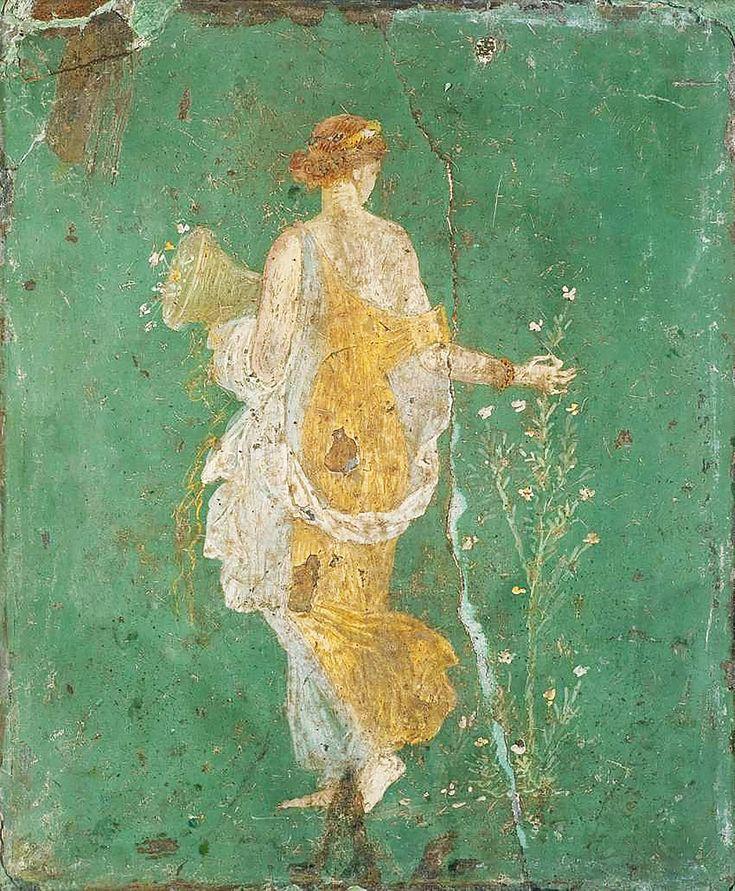
The well-known myth of Pygmalion serves as a foundational narrative of male creative genius, celebrating the sculptor’s divine ability to breathe life into his own ideal. Yet this ideal also works as a tool to marginalise women who are comfortable with their sexuality and their femininity:
One man, Pygmalion, who had seen these women
Leading their lives, shocked at the vices
Nature has given the female disposition
Only too often, chose to live alone,
To have no woman in his bed. (Ovid 1-5)
Unable to find any woman free from vice, Pygmalion resolves the problem by creating his own perfect woman. This perspective focuses squarely on the male artist’s agency and his “abusive privilege of appropriation” (Irigaray 80), while reducing the female to a passive muse or a silent statue that exists merely as a reflection of the man’s desire and status.
In stark contrast to this perspective, Madeline Miller, in her rewriting of the Pygmalion myth, gives voice to Galatea, who is merely a passive muse and a silent statue in the original story. In doing so, she lets the reader hear the voices of the marginalised and oppressed women who have been assigned the role of the “vice-free mother,” deemed worthy of male agency by virtue of their perfect, “carved” bodies. Miller’s Galatea thus does more than give voice to women trapped within gender roles that expect them to be compliant housewives; it also exposes and condemns the corrupt and twisted perspective of patriarchy towards women. This paper argues that Galatea’s most effective weapon against this perspective is the very objectification that has been forced upon her: by performing the passive, compliant woman that patriarchy expects her to be, she turns her oppressors’ expectations against them. Her rebellion is not a feminine essence, which would only repeat the patriarchal logic of “Anatomy is destiny” in reverse, but a strategy she develops under the conditions of her imprisonment, and it shows that rebellion remains possible even for women who seem entirely complicit. Narrated by Galatea herself, the story suggests that it is this intellectual autonomy, together with the solidarity between mother and daughter that it makes possible, that can save the next generation of women from becoming passive statues, both within the domestic sphere and in their social lives.
As Lacan explains in “The Signification of the Phallus,” originally delivered as a lecture and later published in Écrits, the man is positioned as “having” the phallus, the signifier of power in the patriarchal symbolic order, whereas the woman is positioned as “being” the phallus, that is, the one who is made to embody the signifier of the other’s desire (288). This theory can illuminate what Pygmalion and Galatea mean to each other. In the myth, Pygmalion, as the figure of power who “has” the phallus, holds the power to give meaning: he defines Galatea according to his own understanding of the perfect woman, an understanding that strips women of all autonomy and intellect and reduces them to the role of the domestic woman. Galatea, in turn, “is” what he desires. She carries no meaning of her own; she exists only to embody his ideal, carved to his liking and given “... greater beauty / Than any girl could have” (Ovid 7-8). Consequently, when she becomes an actual woman, her coming to life changes nothing in this relationship: she remains a passive object that reflects only Pygmalion’s own desire and status. Yet Lacan’s formula also reveals a weakness on the side of the one who “has.” The man’s “having” is never secure in itself; it needs a woman who “is” in order to be confirmed. As will be seen, Miller’s rewriting exploits precisely this weakness, exposing a Pygmalion who cannot be anyone without his statue.
In Ways of Seeing, John Berger argues that this male perspective within the patriarchal order also shapes the way women see themselves:
One might simplify this by saying: men act and women appear. Men look at women. Women watch themselves being looked at. This determines not only most relations between men and women but also the relation of women to themselves. The surveyor of a woman in herself is male: the surveyed female. Thus, she turns herself into an object and most particularly an object of vision: a sight. (47)
Following this idea, it can be argued that women’s compliance within the patriarchal order is produced partly by their own view of themselves, which traps them in the role of being merely a “sight,” the passive statue of their creators. Galatea’s position in the original myth can be read as this kind of compliance: she occupies neither a voice nor a space in the myth and is therefore only a perfect statue, carved by and for Pygmalion.
In Miller’s rewriting of the Pygmalion myth, an autonomous and intellectual Galatea defies, as a means of survival, all of these ideas inherent to the patriarchal order and to the original myth. Here the reader sees the aftermath of the “perfect” story. Galatea, the perfect woman carved by a man for himself, becomes too much of a human being for her creator, because she can now talk back, fight for her rights and resist. In return, she is locked in a “hospital” on the grounds that she has gone mad, and the only way for her to save herself from the hands of patriarchy is to use her intellectual capacity, which will free her from being a passive statue. In this way, Miller exposes the corrupt expectations patriarchy holds of women: the only way to be the perfect woman is to remain a lifeless statue, even when one is a real woman with feelings, intellect and desires of one’s own. And if women do not comply with this order, their rebellion is dismissed as “madness” (Irigaray 77).
The intellectual autonomy of Miller’s Galatea, which does not fit the patriarchal order’s expectations of women, is the key to both her escape from her husband and her rebellion against patriarchy. To escape, she turns her objectification to her own advantage by appearing compliant. Apart from the times when her husband visits her to have intercourse with her, she is kept sedated by a tea that the doctors and nurses give her. To convince the doctor that she is docile and no longer needs the tea to be “tamed,” she plays the helpless woman at the mercy of a stronger male figure, crying and apologising over and over in various ways (Miller 6) to make the act more convincing. Miller’s Galatea thus ceases to represent the passive statue: by acting as a woman who deliberately complies with the roles assigned to her, she becomes the representation of the intellectual woman, to the point of exploiting the oppressive stereotype of the helpless woman for her own ends. Her intellectual capacity also allows her to deceive her husband and the nurse in order to escape the asylum and the patriarchal order in which she lives. She tells her husband that she is pregnant (Miller 16), believing this could offer her a way out, and when the nurse arrives with a tea meant to make her lose the baby, she manages to manipulate the nurse as well (Miller 17). Once again, she turns the oppression of patriarchy against itself in order to escape it. She wins the nurse’s empathy and is let out (Miller 17). The nurse is a revealing figure here. She is the one who brings the tea that would end Galatea’s pregnancy, which makes her an agent of the very order that oppresses her; in Berger’s terms, she has learned to survey other women on behalf of men. Yet Galatea manages to reach the woman beneath this role, which shows that complicity is not a closed position and that the victims of patriarchy can still recognise one another. To this extent, Miller’s Galatea frees herself from a relationship in which she exists only to embody Pygmalion’s desire. Unlike the Galatea of the original myth, she refuses to be reduced to a passive statue, and becomes an intellectual being who defies patriarchy’s expectations of women.
Miller’s rewriting also exposes the corruption of patriarchy by showing that men, not just Pygmalion, are complicit in this oppressive order while desperately needing women in order to signify themselves. As the story suggests, after the statue Pygmalion carved came to life, “suddenly they all wanted statues from him” (Miller 7). This demand shows that not just one man but all men who internalise the patriarchal order are corrupt; this is not just the story of one man’s corruptness, which proves that the corruption is systemic while also illustrating men’s need to signify themselves through a passive “other” in order to feel power and control. Simply by revealing this dependence, Miller deconstructs the stereotypical relationship, also visible in the original myth, in which the woman is helpless, and the man is her strong controller. Men need women just as the artist needs his muse. As Penny Murray notes, “Muse could signify active forms of creativity in the sitter, as well as the traditionally passive role of inspiring the male poet or artist” (332). Galatea is precious to Pygmalion because she makes him feel that he matters. He tells her that he is her father, mother, brother, husband and lover (Miller 11), since he is her creator and she is not allowed any relationship other than the one she has with him. At first glance, this declaration is the ultimate claim of possession. Read through Lacan, however, it reveals the opposite: if he must be everything to her, it is because he is nothing without her. His “having” depends entirely on her “being,” and the power he exercises over her cannot be separated from his need for her. Galatea’s strategies show that she understands this dependence. She refuses to remain the passive muse whose only function is to confirm the artist and becomes the muse in Murray’s active sense: the one on whom his identity rests, and who can therefore withdraw it. In this way, the power in their relationship no longer belongs simply to the one who creates, and the patriarchal image of the helpless woman is turned on its head.
In Miller’s Galatea, “Galatea is expected to perform her gender in a way that would support and maintain the patriarchal social environment” (Bläuer 33). As discussed earlier, her compliance is a form of deception, and Luce Irigaray offers a name for this strategy: mimicry. For Irigaray, “one must assume the feminine role deliberately,” which already means “to convert a form of subordination into an affirmation, and thus to begin to thwart it”; to play with mimesis is, for a woman, “to try to recover the place of her exploitation by discourse, without allowing herself to be simply reduced to it” (76). This is precisely what Galatea does. She is expected to have intercourse with her husband and then drink the tea the nurses bring to sedate her, and she appears to do exactly what is expected of her. Yet this apparent participation in “maintain[ing] the patriarchal social environment” is deliberate; it is merely a way of calculating her escape. In doing so, she also refuses what Berger identifies as one of the effects of patriarchy: adopting the male perspective as her own view of herself (47). Galatea knows that she is being looked at and plays the “sight” she is expected to be, but she does not become it; the surveyor within her remains her own. Miller’s rewriting thus creates an entirely new Galatea: it takes a Galatea who remained an object even after coming to life and turns her into a subject who does not yield to any expectation that would result in her objectification. Instead, she cleverly turns the objectification inherent in the patriarchal order into the means of her own rescue.
As Irigaray suggests, from the perspective of the patriarchal order, women are seen as nonaggressive, nonsadistic and nonpossessive, a view justified by the claim that “Anatomy is destiny” (71). Miller’s Galatea defies this image of the timid, frigid woman, especially through her relationship with her daughter, Paphos. Miller gives voice not only to Galatea but also to her daughter, the woman of the next generation who must be set free from the chains of patriarchy. In Miller’s Galatea, both Galatea and Paphos are victims imprisoned by Pygmalion. Galatea’s imprisonment is both literal and intellectual, and Paphos’s is not very different from her mother’s: she, too, is not allowed to leave the house or receive a proper education. The only way Galatea can convince her husband to find a tutor for Paphos is to tell him that it will make her “useful for her husband” (Miller 12), once again turning the patriarchal perspective to her own advantage to get what she wants. Even though this attempt ultimately fails when her husband suspects that the tutor was looking at her (Miller 13), the female solidarity at the core of Galatea and Paphos’s relationship endures. This solidarity is also the reason Galatea ends up in the asylum after the two are caught trying to escape the house together, yet it is also proof of the defiance through which Galatea will eventually save the next generation of women from the chains of patriarchy. With this act, Galatea rebels against the image of the nonpossessive, nonaggressive woman who would not rise up against the male figure even for her daughter’s sake. She does not claim her daughter as property, as her husband does; she claims her back from him, protecting her fiercely and fighting, again and again, to escape with her.
The solidarity and closeness between Galatea and Paphos also deconstruct the idea that the little girl’s “penis envy” causes enmity between mother and daughter (Irigaray 69-70). Irigaray criticises this idea as itself patriarchal (69-70), because it operates within a masculine monopoly on value in which the feminine is perpetually described as the “lesser sex” (69). Within Freud’s traditional framework, the daughter’s supposed resentment of her mother stems from a perceived lack, a theory Irigaray views as a “dress-rehearsal” of patriarchal discourse that serves to fracture female bonds (76). Miller’s Galatea, however, demonstrates the opposite. Thanks to her mother, Paphos herself becomes a figure of defiance against the patriarchal order within their domestic sphere. Her defiance differs from her mother’s: as a member of the next generation, she now has the power to stand up to her father, because she has her mother to defend her. When they both face Pygmalion’s anger, Paphos defies her father openly, whereas Galatea once again uses her wit to turn the patriarchal perspective to her own advantage (Miller 13). While she is rebellious and angry towards her father, Paphos’s favourite activity becomes spending time with her mother. Thus, contrary to Freud’s theory of “penis envy,” rather than competing for her father’s favour or mourning a missing phallus, Paphos finds her source of identity and love in her mother. In other words, the daughter refuses to take part in the turning away from the mother that Freud describes as a necessary stage of the girl’s development and that Irigaray exposes as a patriarchal operation.
In this respect, Miller’s Galatea defies what Irigaray considers the very basis of patriarchy: “the murder of the mother.” As Laura Green explains, “According to Irigaray, the killing of the mother is a condition, as well as a symptom, of patriarchy’s operation, an act which underpins and perpetuates phallic binarism” (3-4). This murder is not carried out by a single hand. It is committed by the father, who claims the child as his own possession, and it is completed by the daughter, who, shaped by the same oppressive framework, turns away from the mother as the source of her lack. Galatea refuses to be the submissive mother who lets her child become the father’s possession; instead, she forms a close relationship with Paphos, and, as discussed above, Paphos refuses to turn away from her. Galatea also protects Paphos from her father as much as she can, and in the end, what triggers her escape is her determination to protect her daughter. When she learns that the new statue her husband is working on is a ten-year-old girl, the same age as Paphos (Miller 9), and knowing the corrupt mindset of a husband who carved her as a statue to make her his wife, she decides to save her daughter and, by extension, the statue that mirrors her. Through her rewriting, Miller thus sheds light on a crucial issue: “the murder of the mother,” as an operation of patriarchy, is one of the greatest obstacles to protecting the next generation of women from the chains of patriarchy. Had Galatea not defied her husband, had she chosen to remain merely an object, there would have been no way to save her daughter from her father, or other ten-year-old girls from other corrupt patriarchal minds.
Through all these re-enactments, Miller’s Galatea not only rewrites the myth of Pygmalion but also deconstructs patriarchal discourse. Simply by referring to Pygmalion as “the husband” throughout the story, Miller returns power to Galatea and challenges patriarchal discourse (Bläuer 44): Galatea is no longer the artist’s object but the voice of the story. The only way to challenge, and ultimately dismantle, the discursive mechanism of gender, which Irigaray likens to a “dress-rehearsal” (76), is to give voice to women who can confront this mechanism. Galatea’s rebellion in Miller’s rewriting changes the language, and whoever changes the language has the power to change the discourse. Once the discourse changes, the masculine would no longer be “everything” (Irigaray 80): “The right to define every value, including the abusive privilege of appropriation, would no longer belong to it” (Irigaray 80). Accordingly, in Miller’s Galatea, the silent, passive statue is no longer silent; she has the power to define herself within her own story. Her escape and her daughter’s survival, free from the chains of patriarchy, come about through her own agency.
At this point, a question arises: if Galatea resists “the murder of the mother,” how can her death at the end of the story be read as anything other than its fulfilment? Galatea does die, but her death does not take place within the oppressive framework that Irigaray identifies as the basis of patriarchy. In Irigaray’s account, the mother is killed by the husband and by the daughter, the two figures through whom the patriarchal family reproduces itself (142-143). In Miller’s story, Galatea’s death comes from neither of them. Her husband does not kill her; he wants her alive, locked up and available to him. Her daughter does not turn away from her; she remains bound to her mother by love and solidarity. Galatea’s death is in her own hands; she leaves herself to the waves of the sea, to the “sandy ocean floor as soft as pillows” (Miller 20), and it is the means by which she escapes the oppressive cycle rather than the act that completes it. In this sense, her death is a “female act” (Bayram 10), an act of defiance and rebellion: even though her birth was not her own decision, her death is (Bayram 10).
Galatea’s death is also metaphorical, because Galatea was never supposed to be alive. She was carved and then brought to life for the pleasure of a man, without ever being asked. Her life itself is the result of an act committed upon her without her consent, the first of all the acts of possession that follow. By dying, she takes everything back: she cancels the perpetrator’s non-consensual act of turning her into a real human being and returns to how everything was before he laid his hands on the stone. Seen in this way, Galatea’s death is not a murder of the mother but an undoing of the creation. She takes Pygmalion, her oppressor, with her, freeing not only her daughter but also the world from a corrupt creator who might otherwise create more bodies to dominate and imprison. What dies with her is not the bond between mother and daughter, which survives in Paphos, but the patriarchal act of creation that made Galatea an object in the first place.
In conclusion, Madeline Miller’s Galatea is a profound subversion of the Ovidian myth, transforming a narrative of male artistic dominance into a testament to female intellectual autonomy. By shifting the perspective to the statue herself, Miller deconstructs the Lacanian dynamic in which the man, as the one who “has” the phallus, imposes meaning upon a woman who is reduced to “being” the embodiment of his desire, and she exposes the weakness at the heart of this dynamic: the man’s “having” depends on the woman’s “being.” This rewriting shows that Galatea’s struggle is not merely for physical freedom but for the reclamation of her own identity from the surveyor’s gaze that John Berger describes as central to the patriarchal order.
Galatea’s rebellion is particularly striking because it uses the very tools of her oppression, docility and objectification, as a strategic mask with which to manipulate her oppressors; it is, in Irigaray’s terms, a deliberate mimicry that converts subordination into resistance. Her performance of compliance becomes a weapon of agency, ultimately allowing her to transcend the domestic sphere and the label of “madness” imposed by a system that fears female resistance. Furthermore, the solidarity between Galatea and her daughter, Paphos, dismantles the Freudian notion of “penis envy” and refuses the patriarchal “murder of the mother,” in which both the father and the daughter are made to take part, replacing it with a restorative bond of female protection and love. This relationship ensures that the next generation of women is no longer imprisoned by the chains of patriarchy or by the expectation to remain passive statues.
Ultimately, Miller’s narrative choice to refer to Pygmalion only as “the husband” strips him of his legendary status as a divine creator and reduces him to a mortal oppressor, thereby returning the power of definition to Galatea. Although her story ends in death, that death is an act of supreme agency, a “female act” carried out neither by the husband nor by the daughter but by Galatea herself. It undoes the non-consensual act of her creation and breaks the patriarchal cycle. By taking her creator with her, Galatea ensures that no more “perfect” statues can be carved to satisfy the corrupt desires of men. Miller thus shows that by changing the language of the myth, one changes the discourse itself, so that the masculine is no longer “everything” and women can finally define themselves within their own stories.
Works Cited
Bayram, Aslı. "The Matter of Bodies: Ableist Bodies, Disablement and Disembodiment in Sylvia Plath's 'Lady Lazarus' and Madeline Miller's 'Galatea'." Maltepe University Journal of English Language 1.1 (2023): 1-13. Print.
Berger, John. Ways of Seeing. London: Penguin Books, 1972. Web. 14 Jan. 2026.
Bläuer, Sonja. “As if there can be no story unless we crawl and weep”: Gendered Power in Madeline Miller’s Circe and “Galatea”. MS thesis. Tampere University, 2021. Web. 14 Jan. 2026.
Green, Laura. "Myths, Matricide and Maternal Subjectivity in Irigaray." Studies in the Maternal 4.1 (2012): n. pag. Mamsie. Web. 14 Jan. 2026.
Irigaray, Luce. This Sex Which Is Not One. Trans. Catherine Porter and Carolyn Burke. Ithaca: Cornell UP, 1985. Web. 14 Jan. 2026.
Lacan, Jacques. "The Signification of the Phallus." Écrits: A Selection. Trans. Alan Sheridan. New York: W.W. Norton & Co., 1977. 281-91. Web. 14 Jan. 2026.
Miller, Madeline. Galatea. New York: Ecco, 2013. EPUB file.
Murray, Penny. "Reclaiming the Muse." Laughing with Medusa: Classical Myth and Feminist Thought. Ed. Vanda Zajko and Miriam Leonard. Oxford: Oxford UP, 2006. 327-54. Print.
Ovid. Metamorphoses. Trans. Rolfe Humphries. Bloomington: Indiana UP, 1961. 241-43. Web. 14 Jan. 2026.